Invisalign
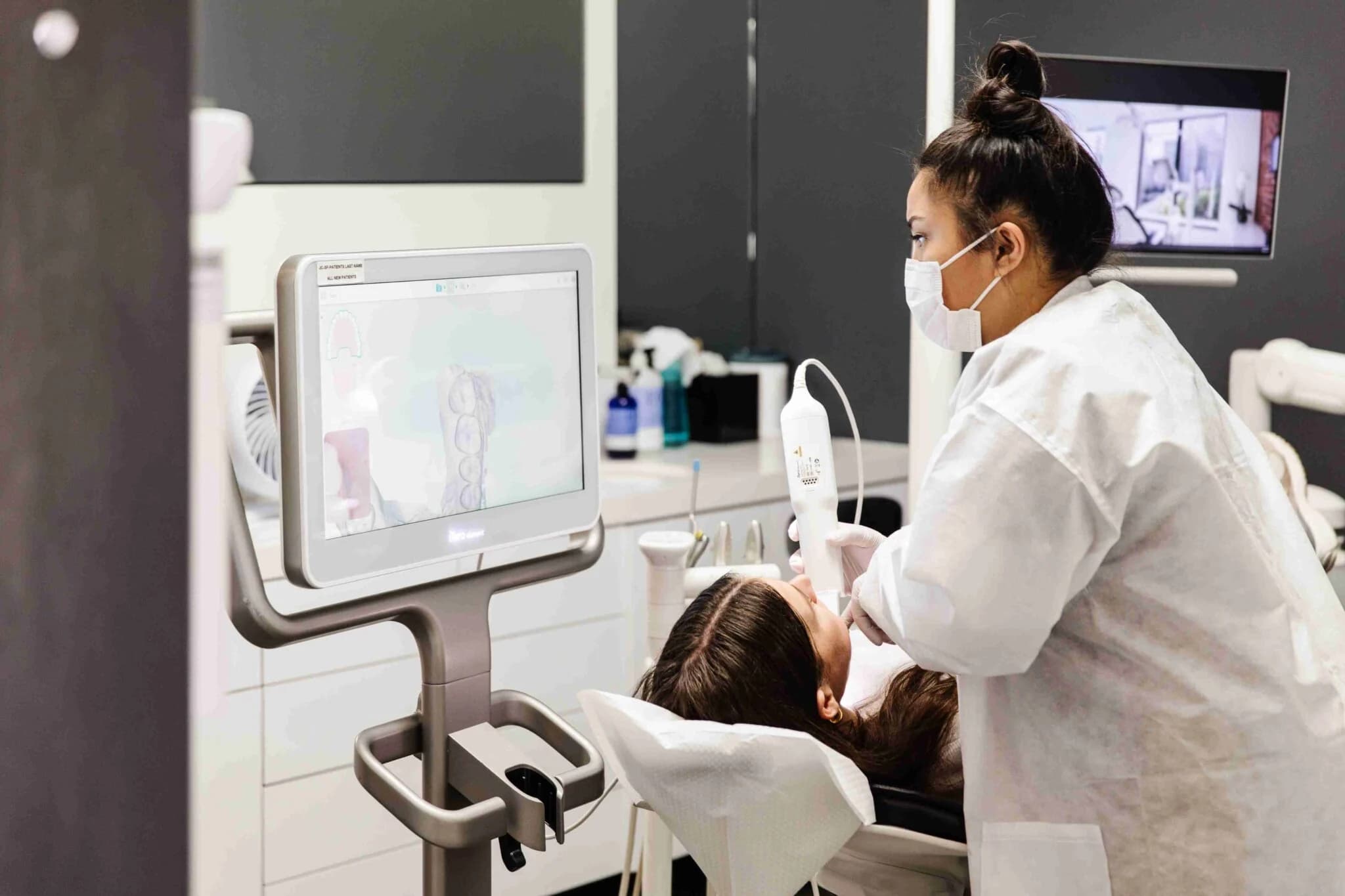
Treatment planning on screen
Straighter teeth without brackets and wires — after an honest answer about whether aligners can do what you want.
Invisalign moves teeth with a sequence of clear, removable aligner trays, each worn about two weeks. No brackets, no wires, nothing that shows in a meeting or a photograph — which is why it suits working adults who never got around to braces, or whose teeth have drifted since.
The part that matters more than the brand name: aligners are a tool, and not every bite is an aligner case. The first appointment is a candidacy assessment, and if your case needs something aligners can't deliver, we tell you that before you've spent anything.
Begin
Find out if aligners fit your case
Send the form and the front desk will book your candidacy assessment — an examination and an honest written answer about what aligners can achieve for your teeth.
or call (415) 392-5025Real patients
Straighter teeth, in their words
Individual results vary
How it works
Candidacy first
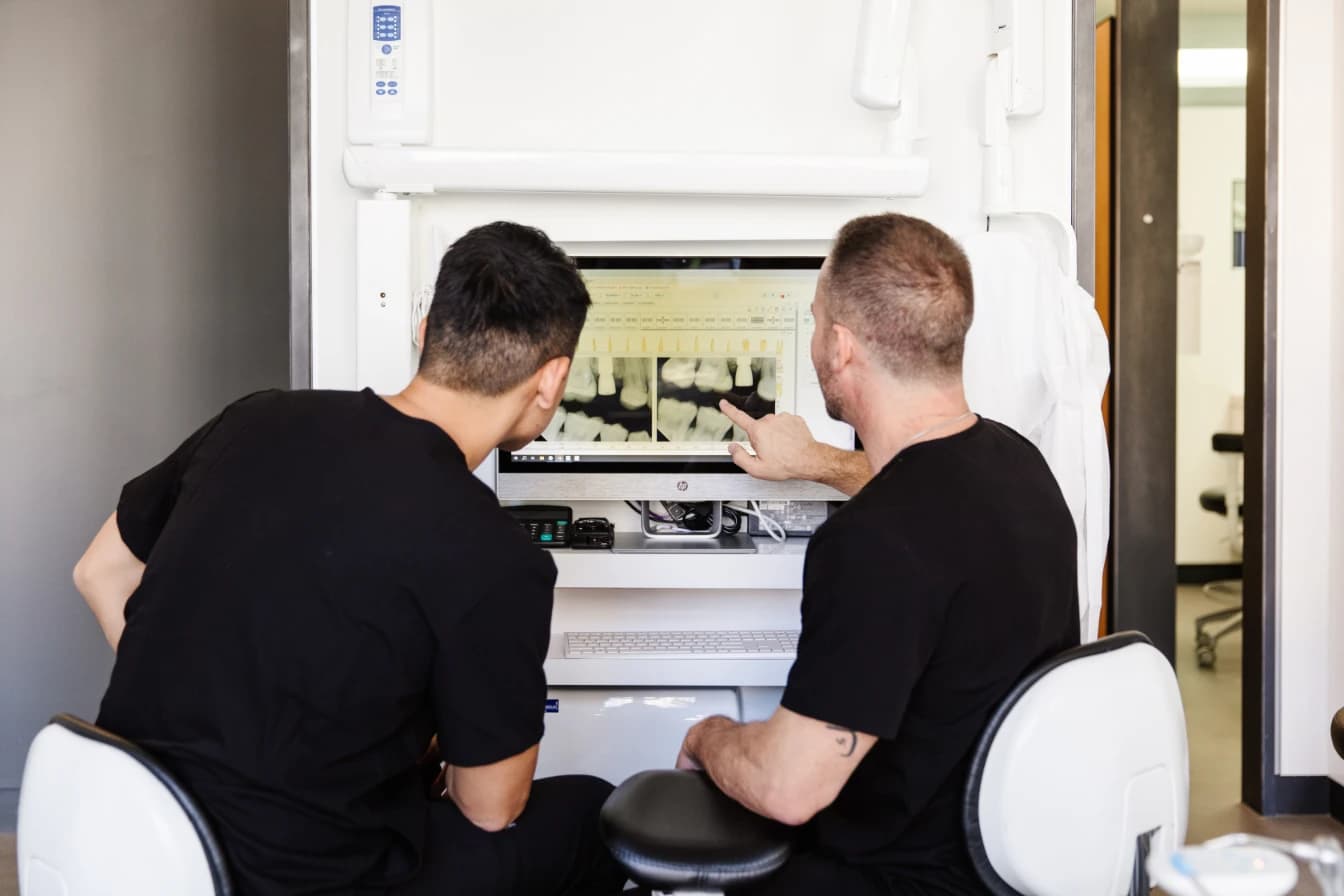
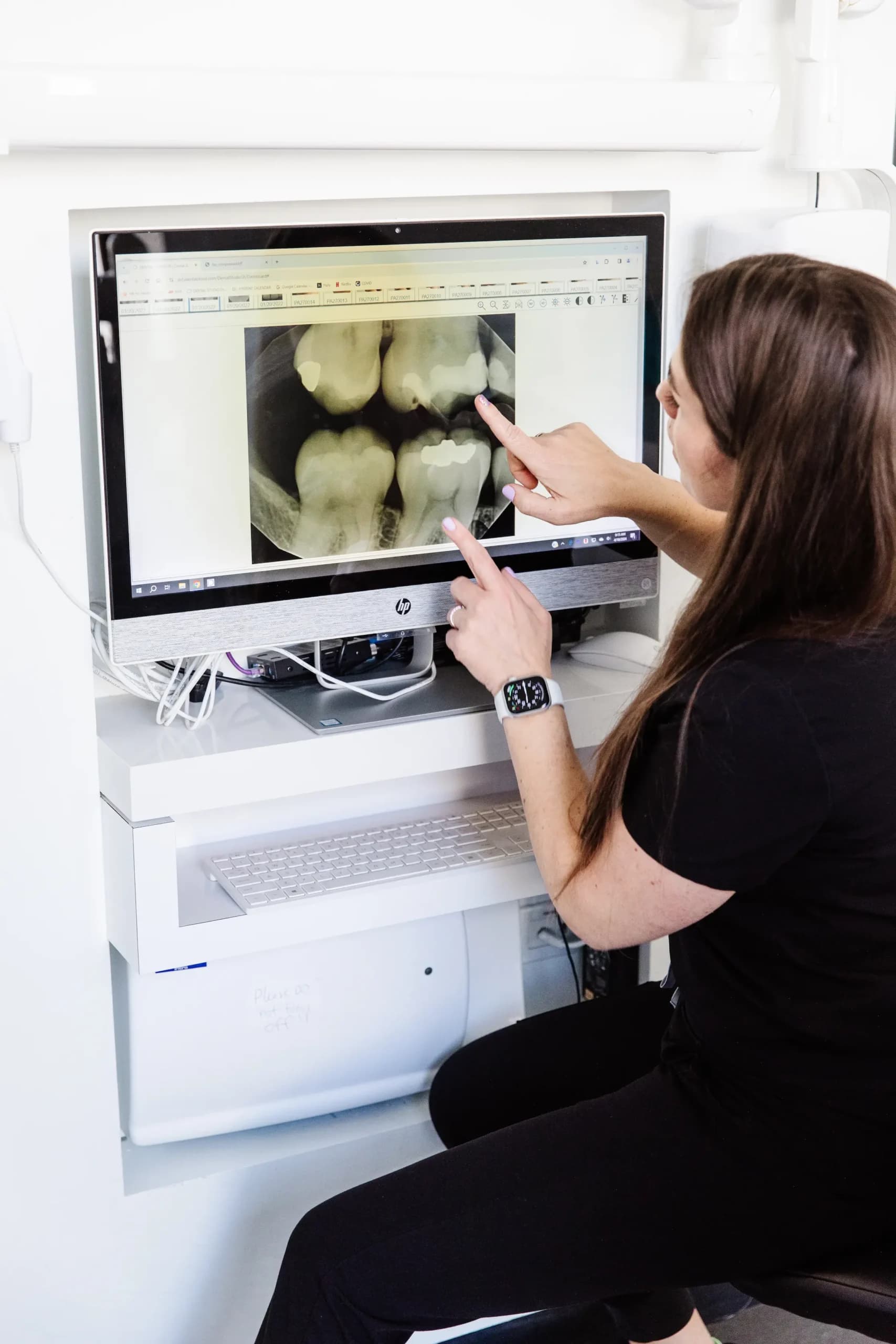
Crowding, spacing, relapse after old braces and many mild-to-moderate bite issues respond well to aligners. Complex bite problems may not. We examine, we tell you which you are, and we put the answer in writing.
Your plan, mapped before you start
Digital records of your teeth are used to plan the full sequence of movements from first tray to last, so you know the expected duration before you commit to anything.
Wear the trays, change them on schedule
Aligners are worn about 22 hours a day and come out for eating and brushing. Discipline with wear time is the single biggest factor in staying on schedule — we're honest about that up front.
Short checkups, then retainers
Progress checks are brief and spaced weeks apart — easy to fit around a downtown work schedule. When treatment ends, retainers protect the result; teeth that straightened once will drift again without them.
Fit
Who aligners suit
The typical Invisalign patient here is an adult who wants the correction without two years of visible hardware: crowding that has gotten worse with age, a gap that never closed, or teeth that moved back after teenage braces when the retainer got lost.
Removable trays also make everyday life simpler — you eat what you like, and brushing and flossing carry on as normal, which matters for keeping gums healthy during treatment.
Honesty
What aligners can't do
Severe rotations, significantly impacted teeth and major jaw discrepancies are beyond what aligners reliably deliver. Where that's your case, we say so at the assessment and explain the alternatives — including when a referral to a specialist orthodontist is the right answer.
That honesty is the point of doing the assessment before anything else: you should know what the tool can achieve for your teeth, not for teeth in general.
Money
Insurance and paying for treatment
Many PPO dental plans include an orthodontic benefit that applies to Invisalign — the front desk verifies yours before treatment is planned. Financing through providers such as Cherry and CareCredit can spread the remainder, and you'll have the full cost picture in writing before you commit.
Talk it through
Not sure which option applies to you?
Begin
Find out if aligners fit your case
Send the form and the front desk will book your candidacy assessment — an examination and an honest written answer about what aligners can achieve for your teeth.
Questions
Common questions
How long does Invisalign take?
It depends on how far the teeth need to move — minor corrections can be done in months, fuller cases take longer. Your plan is mapped digitally before you start, so you get an expected duration for your case, not an average.
Does it hurt?
New trays feel tight for a day or two — that pressure is the treatment working. Most patients describe it as noticeable rather than painful, and it's considerably gentler than the memory most adults have of braces being tightened.
Will people be able to tell?
At conversational distance, generally not. The trays are thin and clear, and they come out entirely for photographs, presentations and dinners — that flexibility is most of why adults choose them.
Do I really have to wear them 22 hours a day?
Yes, and we'd rather tell you that now than after you've started. Trays only move teeth while they're on the teeth. Patients who treat them as full-time appliances finish on schedule; patients who don't, don't.
Does insurance cover Invisalign?
Many PPO plans carry an orthodontic benefit that applies to aligner treatment. We verify your specific benefit before planning anything, and you'll see how it applies in your written plan.
What happens when treatment ends?
Retainers. Teeth have memory, and the result needs protecting — typically full-time wear briefly, then nights. It's a small habit that makes the correction permanent.
Keep reading