Laser Dentistry
Soft-tissue laser, in-house
Gentler treatment, less bleeding, faster healing.
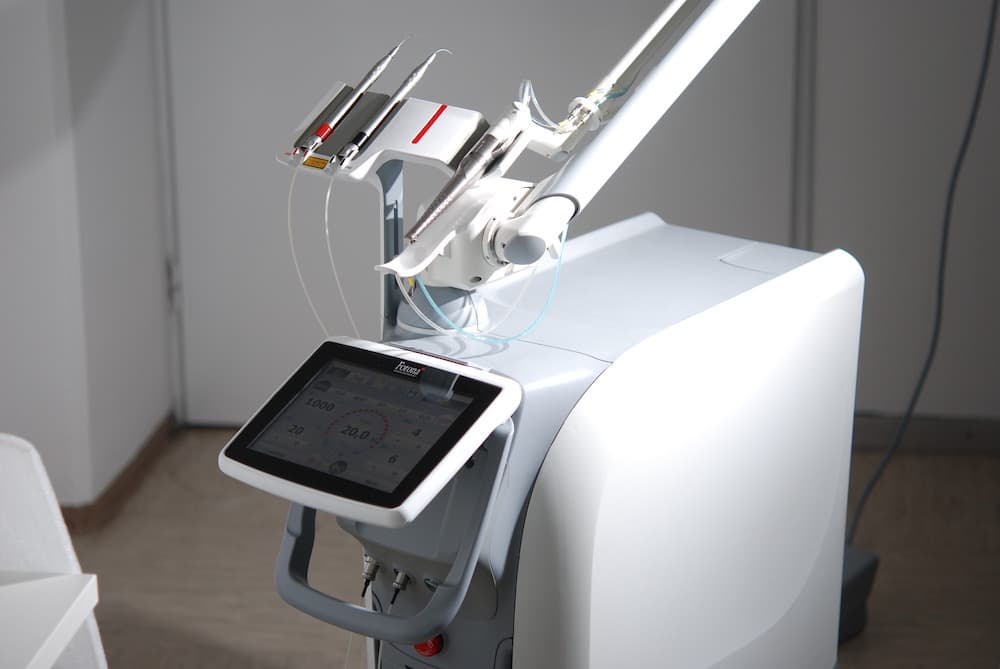
A dental laser does with focused light what has traditionally been done with a blade — reshape gum tissue, treat infected tissue in a periodontal pocket, or relieve a cold sore. Because it seals as it works, there is typically less bleeding, less swelling afterwards, and often less need for a scalpel or sutures.
We have the system in-house, so it's part of ordinary treatment rather than a referral.
Real patients
Laser gum treatment, in their words
Individual results vary
Uses
What we use it for
Soft-tissue laser treatment is useful in several everyday situations:
- 01Gum treatment — removing infected tissue from periodontal pockets
- 02Cold sores and canker sores — relief and faster healing, best treated early
- 03Reshaping gum tissue where the gum line is uneven or covers too much tooth
- 04Releasing a restrictive tongue or lip attachment
- 05Preparing gum tissue before restorative work
Why it helps
What the difference is for you
The practical differences patients notice are less bleeding during treatment, often less need for stitches, and a more comfortable few days afterwards. Many soft-tissue procedures need less anaesthetic than the equivalent surgical approach.
It isn't a replacement for everything, and we'll say when a conventional approach is the better choice for your situation.
Cold sores
Treating a cold sore early
Cold sores respond best when treated at the tingling stage, before the blister forms — laser treatment at that point can shorten the episode considerably and reduce the discomfort. Because that window is short, call as soon as you feel one starting rather than waiting for your next appointment.
Canker sores inside the mouth are a different condition with a similar frustration, and they respond to the same approach: treated directly, they tend to stop hurting sooner and heal faster.
Gum contouring
Reshaping an uneven or low gum line
Some people show more gum than tooth when they smile, or have a gum line that sits unevenly across the front teeth. Where the cause is excess tissue rather than the position of the jaw, a laser can reshape the gum line precisely, sealing as it goes so there is little bleeding and usually no sutures.
It is also used to expose more of a tooth before restorative work, so a crown or filling can meet healthy tooth structure with a clean margin.
Pigmentation
Gum depigmentation
Naturally dark patches in the gums are harmless — the colour comes from melanin, exactly as in skin — but some patients would rather they were not visible when they smile. A laser can lighten the pigmented tissue in a short appointment with a straightforward recovery.
As with any cosmetic treatment, we will tell you honestly what the result is likely to be and whether it is worth doing at all.
Jaw pain
Laser therapy for jaw and muscle pain
Low-level laser therapy is also used on the muscles and joint in cases of jaw pain, where the goal is to reduce soreness in an overworked muscle rather than to cut anything. It requires no anaesthetic and no recovery time, and is usually delivered as a short course alongside the rest of a jaw-pain plan.
Talk it through
Not sure which option applies to you?
Questions
Common questions
Does laser dentistry hurt?
Most soft-tissue laser treatment is comfortable and frequently needs less anaesthetic than the equivalent surgical approach. Recovery is typically easier too, with less swelling in the days afterwards.
What is a dental laser used for?
Soft-tissue work: treating infected tissue in gum pockets, reshaping an uneven gum line, relieving cold sores and canker sores, releasing restrictive tongue or lip attachments, and preparing gum tissue before restorative treatment.
Can a laser treat a cold sore?
Yes, and timing matters. Treated at the tingling stage before the blister appears, laser treatment can noticeably shorten the episode. Call as soon as you feel one starting rather than waiting.
Is laser gum treatment a replacement for gum surgery?
For some situations, yes; for others, no. It depends on how advanced the gum disease is and how much tissue and bone are involved. We'll assess and tell you honestly which approach fits your case.
Can a laser fix a gummy smile?
Where the cause is excess gum tissue, yes — the gum line can be reshaped precisely and heals quickly. Where the cause is the position of the jaw or the teeth themselves, a laser is the wrong tool and we will say so rather than treat around the problem.
Is dark gum pigmentation a health problem?
No. The colour comes from melanin, exactly as in skin, and it is entirely normal. Lightening it is a cosmetic choice, not a treatment for anything.
Will my insurance cover laser treatment?
It depends on the procedure and your plan — treatment with a clear clinical purpose, such as periodontal treatment, is often covered. We verify your benefits before treatment.
Keep reading