TMJ & Facial Pain
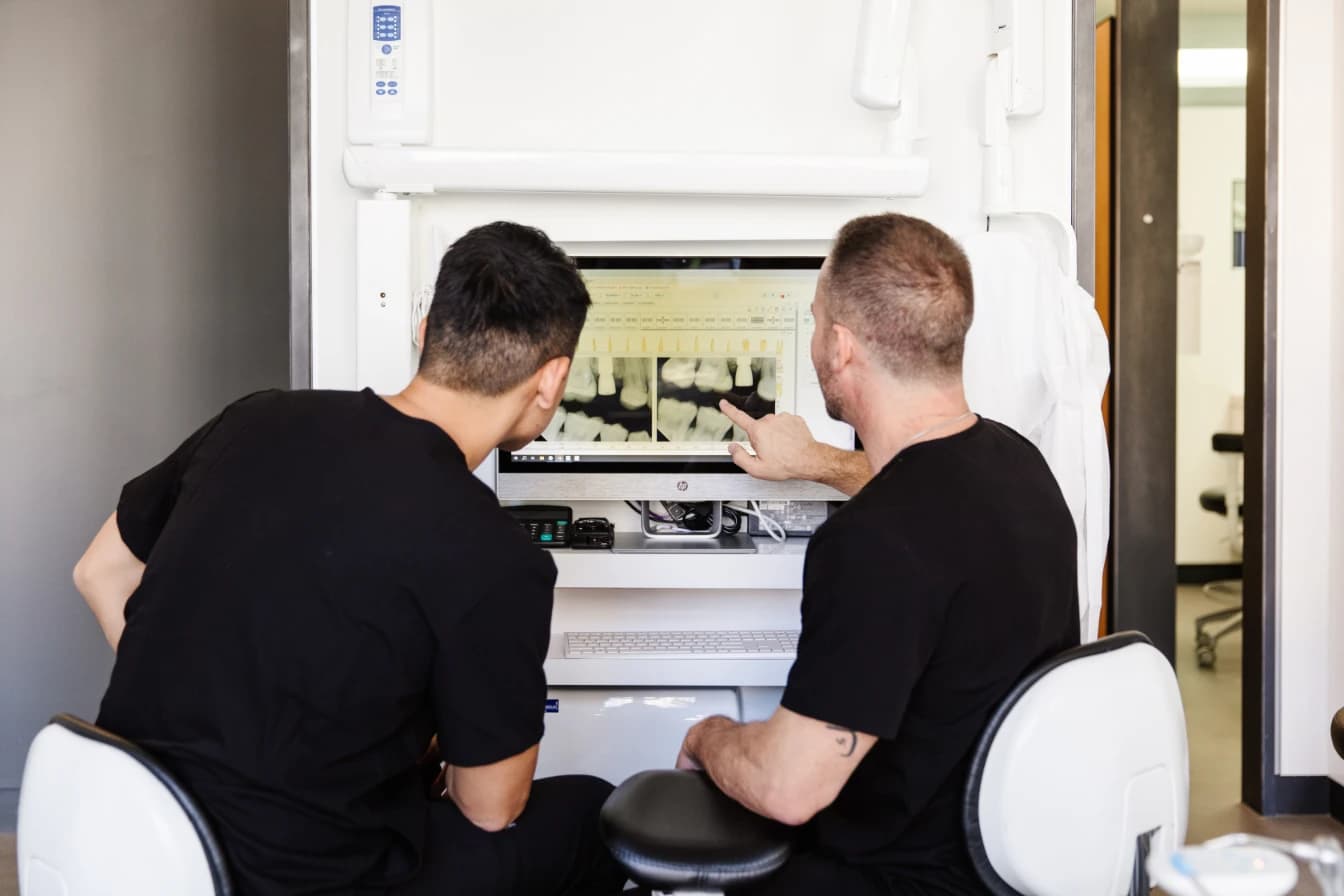
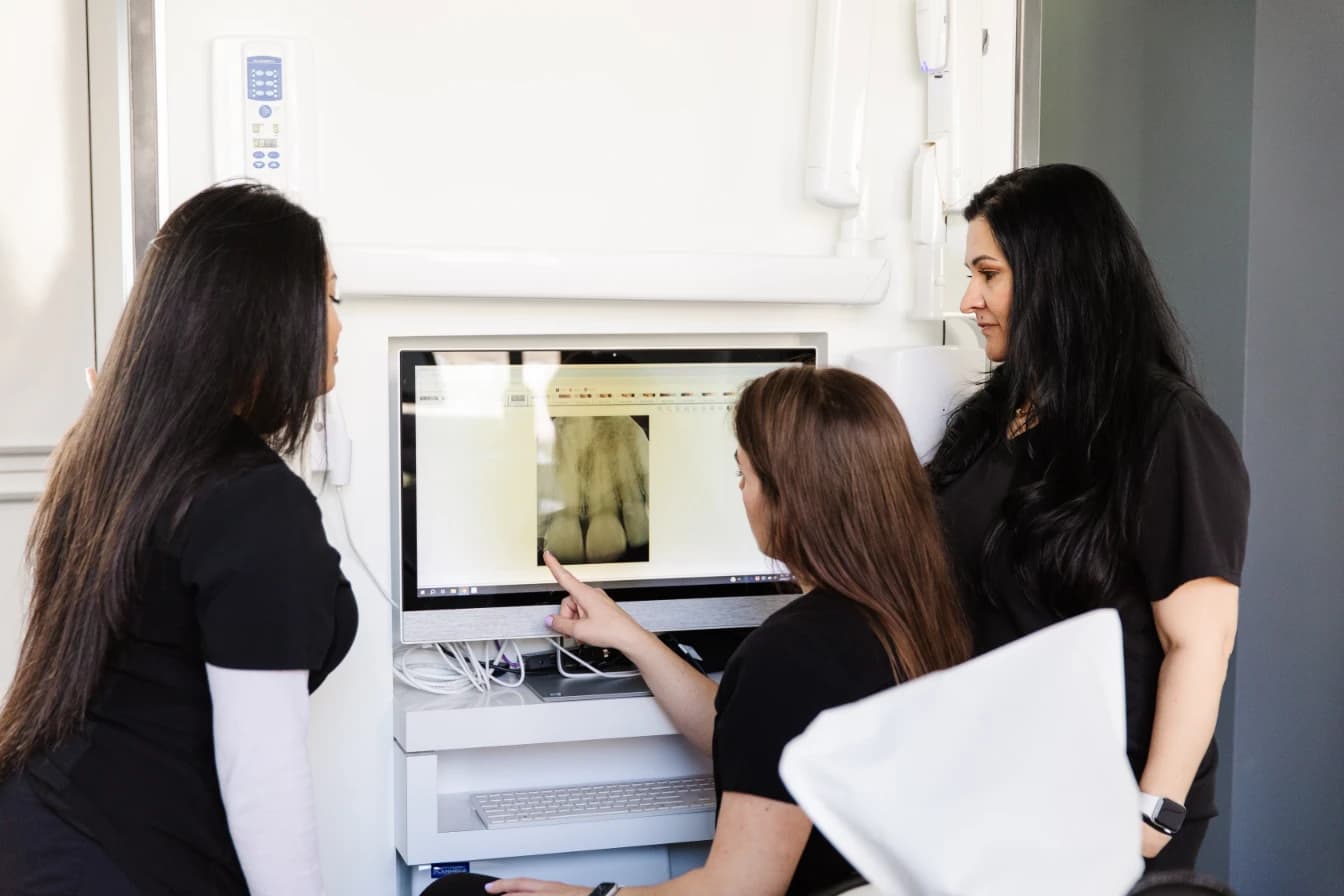
Reviewing imaging together
Jaw pain taken seriously — starting with finding out what's causing it.
Jaw pain, clicking, morning headaches and worn-down teeth are usually connected, and they're frequently dismissed. The temporomandibular joint and the muscles around it do an enormous amount of work, and when the bite, the muscles and the joint aren't cooperating, the symptoms show up in several places at once.
The useful first step is a proper assessment rather than a guess — because clenching, arthritis in the joint, a displaced disc and a bite problem all feel similar to the patient and are treated differently.
Real patients
Jaw pain and sleep patients, in their words
Individual results vary
How we assess it
History and symptom pattern
When it hurts, what makes it worse, whether it wakes you, whether it clicks or locks. Morning pain points somewhere quite different from end-of-day pain.
Examining the joint, muscles and bite
How far the jaw opens, whether it deviates, which muscles are tender, and how the teeth actually meet — including the wear patterns on them.
Imaging where it's warranted
Digital imaging when the joint itself needs to be seen. We don't image reflexively.
A plan that starts conservatively
Most cases begin with reversible measures. Irreversible treatment is a last resort, not a first move.
Symptoms
What tends to bring people in
These frequently travel together, which is part of why they get missed:
- 01Aching or tender jaw, especially on waking
- 02Clicking, popping or grating when opening and closing
- 03Headaches around the temples, and pain behind the eyes
- 04Teeth that are worn flat, chipped or increasingly sensitive
- 05Earache or a feeling of fullness with nothing wrong in the ear
- 06A jaw that catches, locks, or doesn't open as far as it did
Referred pain
Why it shows up as headaches, earache and neck pain
The temporomandibular joint sits directly in front of the ear, and the muscle that closes the jaw runs up the side of the head. So a joint or muscle problem rarely stays local — it refers.
Headache is the most common of these. Pain across the temples that is worst on waking usually points to overnight clenching rather than to a headache disorder. Earache with a normal ear examination is the second: the joint is close enough that patients reasonably report it as ear pain, sometimes with fullness or ringing.
Neck and shoulder tightness travels with it, because the jaw, neck and shoulder muscles work as a group and posture affects the resting position of the jaw. Treating the jaw in isolation while ignoring the neck often disappoints.
Treatment
What conservative treatment looks like
A custom orthotic appliance — a splint or night guard made from impressions of your teeth — is often the starting point. It protects the teeth from grinding forces and, by changing where the jaw rests, can reduce muscle load overnight. An over-the-counter boil-and-bite guard is not the same thing and can make some cases worse by altering the bite unpredictably.
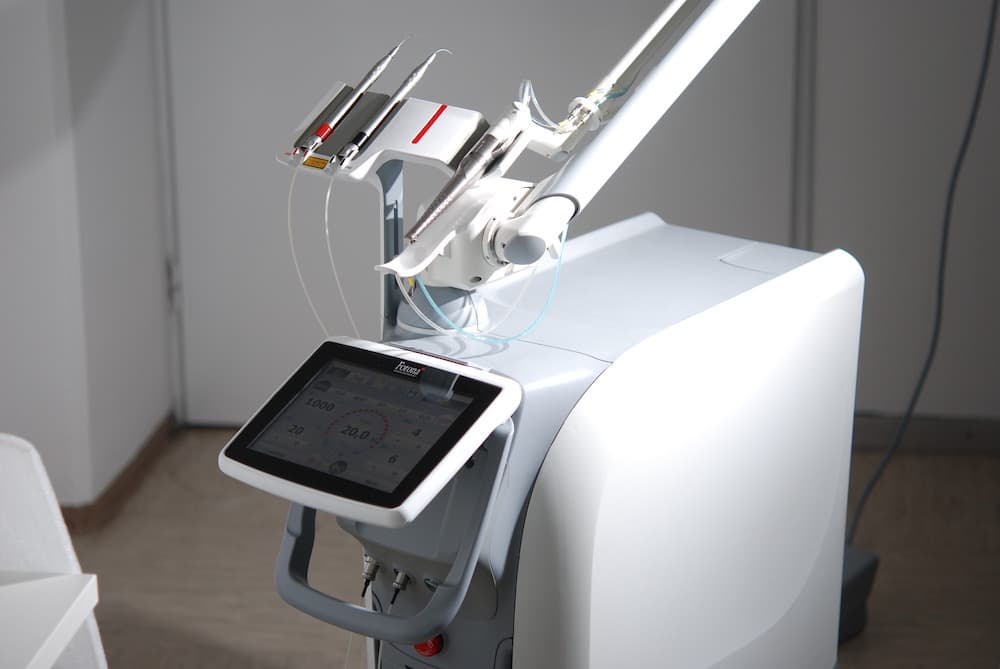
Where muscle pain dominates, low-level laser therapy is available in-house — it targets the sore muscle directly and needs no anaesthetic or recovery time. Where the bite is contributing, adjusting how the teeth meet may form part of the plan. Where the joint itself is damaged, imaging guides what is realistic.
At home
What actually helps between appointments
Self-management does more of the work than most patients expect, particularly for muscle-driven pain:
- 01Notice daytime clenching — teeth should be apart at rest, lips together. Most clenchers have no idea they do it
- 02Softer food during a flare-up, and cut it up rather than opening wide
- 03Moist heat on the muscle for tightness; cold on the joint for acute swelling
- 04Avoid gum, chewy sweets, ice and nail-biting — all sustained loading
- 05Gentle controlled opening and closing exercises, if we have shown you which ones apply to your case
- 06Sleep position and pillow height, which change overnight jaw and neck loading
Talk it through
Not sure which option applies to you?
60-second self-check
Could it be your jaw?
Four questions about pain, clicking and headaches. You'll see a plain answer straight away, and can send it to us to prepare an evaluation.
Question 1 of 4
Questions
Common questions
What causes TMJ pain?
Several different things that feel similar: clenching and grinding, muscle overload, a displaced disc within the joint, arthritis affecting the joint, or a bite where the teeth and jaw are working against each other. They're treated differently, which is why the assessment matters more than the label.
Are my headaches related to my jaw?
They can be. Headaches around the temples that are worst on waking often relate to overnight clenching, because the muscle that closes the jaw runs up the side of the head. It's worth assessing rather than assuming either way.
Will a night guard fix it?
A custom guard protects your teeth from grinding forces and frequently reduces muscle soreness, which for many patients is a substantial improvement. Whether it addresses the underlying cause depends on what that cause is.
Does TMJ treatment mean surgery?
Very rarely, and not as a starting point. The great majority of cases are managed with reversible, conservative measures — a splint, self-management, physical therapy, and addressing the bite where it's contributing.
Can TMJ cause ear pain or ringing?
It can. The joint sits immediately in front of the ear canal, so joint and muscle problems are commonly reported as earache, fullness or ringing with an entirely normal ear examination. If you have been told your ears are fine but they still hurt, the jaw is worth assessing.
Can I just buy a night guard from a pharmacy?
A boil-and-bite guard protects the teeth to some extent, but it is not fitted to your bite and in some cases it changes how the teeth meet in a way that makes symptoms worse. A custom appliance is made from impressions of your own teeth and is adjusted to your bite.
How do I know if I grind my teeth at night?
The usual signs are morning jaw soreness or headache, teeth that are worn flat or chipped, increasing sensitivity, and sometimes a partner who hears it. Wear patterns on the teeth are often the clearest evidence and are visible on examination.
Keep reading